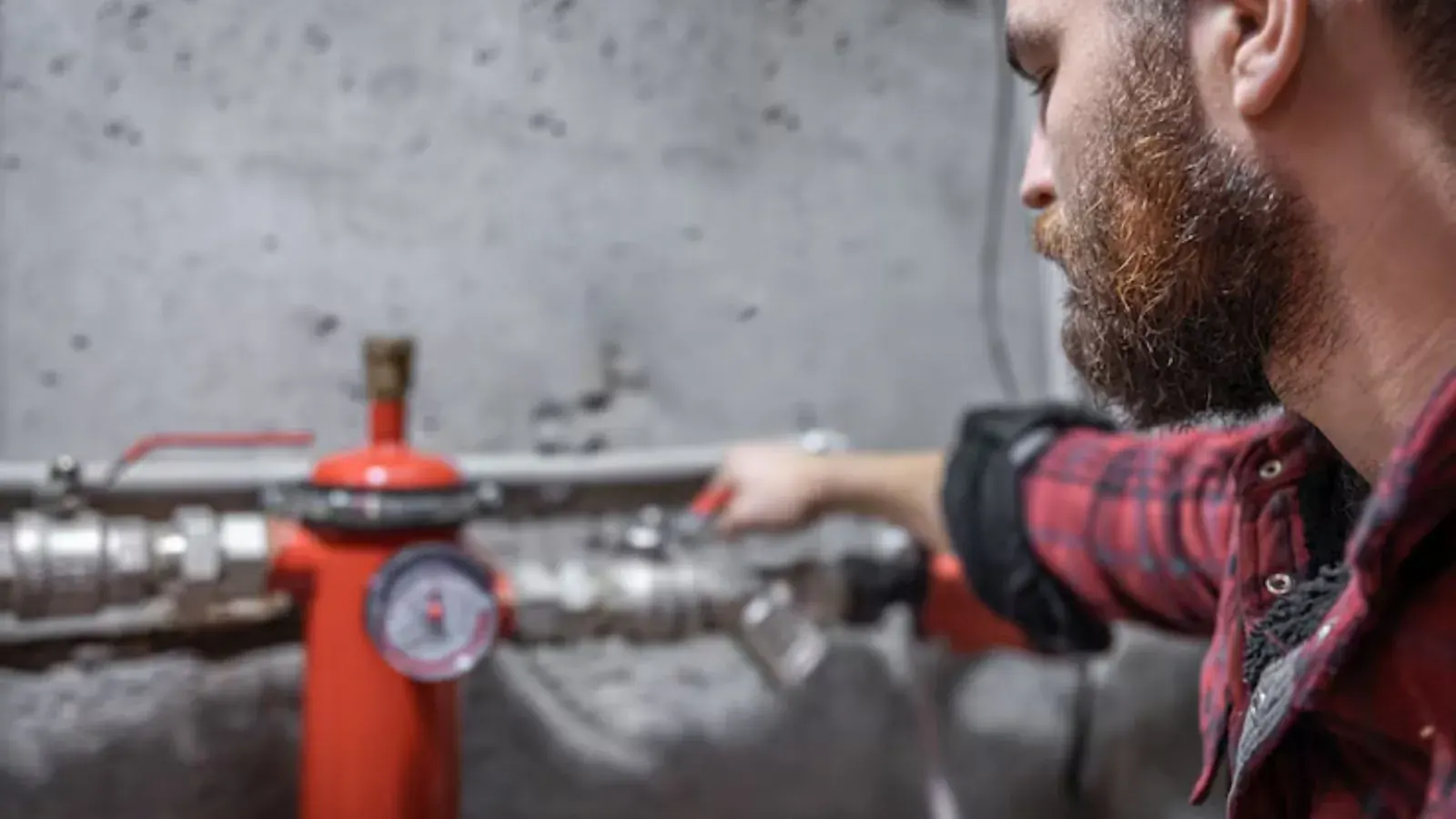
When a suspected leak is an emergency
Some leaks announce themselves. Others show up as a number on a bill. We treat a leak as urgent when water is visibly spreading, when a ceiling is sagging, or when the meter is spinning while every fixture is off.
- Water stains growing on a ceiling or wall, or paint bubbling above a bathroom.
- A warm spot on the floor, or the sound of running water when nothing is on.
- A meter that keeps turning with every fixture off.
- A wet basement wall or floor with no storm to explain it.
What to do before we arrive
- Find the main shutoff. In most Plainfield homes it sits where the water line enters the basement, usually near the meter. Turn it clockwise to stop all water.
- Check the meter. With every fixture off, watch the small dial or low-flow indicator for a minute. If it moves, water is leaving the house somewhere.
- Protect electrical areas. If water is near outlets, a panel or a ceiling light, turn off the breaker for that area from a dry spot.
- Document it. Photograph stains and damage before anything is moved. An insurance claim goes faster with dated photos.
How we find a leak without opening every wall
We start with the symptoms and work toward the source. A wet ceiling usually leads us to the room above, and a bill that doubled points us toward the supply line or an appliance. Then we confirm with equipment rather than guessing.
Meter and pressure test
We isolate the supply side from the fixtures and watch the meter and a pressure gauge to learn whether the leak is before or after the main valve.
Acoustic listening
Sensitive microphones pick up the sound of water escaping a pressurized pipe through floors, walls and soil.
Thermal imaging
A thermal camera shows temperature differences from hot water lines or wet material behind a surface.
Moisture mapping
A moisture meter charts how far water has traveled so we repair the source and dry the right area.
No single tool finds everything. Plastic pipe is quiet, a deep slab line is harder to hear, and a leak under a concrete floor may need two methods to pinpoint. We tell you which method we used and how sure we are before anyone cuts into a finished surface.
Meter still running or a high water bill
Many leak calls start with a bill, not a puddle. If your usage jumped and you cannot explain it, check the toilets first, because a flapper that does not seal can waste a lot of water without a sound. Then check the meter with every fixture off.
If the meter moves, the leak may be inside the house, under a slab, or in the buried water service line between the street and the house. We separate those cases with a pressure test. If the buried line is the problem, water service line repair explains the repair options.
Your water bill comes from New Jersey American Water, the utility listed as serving Plainfield. If you suspect a billing error instead of a leak, ask the utility to verify the meter reading. The meter test above tells you whether water is truly leaving your pipes.
Ceiling, wall, under-house and buried-line leaks
A leak in a ceiling is often a failed supply line, a drain joint or a tub overflow above it, and the stain can appear several feet from the real source. Water follows framing before it shows itself, so we trace it back along the joists rather than cutting where the stain is.
Basement and crawl-space leaks are common in older Plainfield houses with partial basements. We check the supply lines overhead, the drain lines and the foundation wall, because groundwater and plumbing leaks can look identical. We separate them by testing the plumbing first.
Buried leaks, such as a failing yard line to an outbuilding or an irrigation line, show up as a soft spot, a patch of grass that stays green or a pressure drop. We locate them with listening gear and mark the spot so any excavation is limited to a small area. Slab leaks follow the same method, and we explain the options before touching a floor.
Plainfield note: old houses, new leaks
The Crescent Area Historic District contains 111 contributing buildings, most built between 1870 and 1900. Houses from that era were plumbed long after they were built, so supply lines are often a patchwork of copper, galvanized steel and plastic joined at different times.
Where galvanized steel remains, corrosion from the inside is a typical cause of pinhole leaks and low pressure. If we find more than one leak on the same older line, we may suggest comparing a repair with repiping so you are not chasing leaks one at a time.
What affects the price of leak detection
- Where the leak might be.An exposed bathroom wall is quicker to test than a line under a finished floor.
- The pipe material.Copper, PEX, galvanized and cast iron respond differently to listening gear.
- Access to the main and fixtures.We need to isolate sections to test, and blocked shutoffs add time.
- Whether repair follows.Finding the leak is one price. Fixing it depends on the pipe and the surface above.
- Time of day.After-hours dispatch is priced differently from a scheduled visit.
Many insurers pay for damage from a sudden leak but not always for the cost of locating it. Ask your carrier what applies to your policy. Call (908) 357-1542 for your real number.
Water where it should not be?
Tell us what you are seeing and whether the meter is moving. We will plan the visit around it.
Where we find leaks
We work across Plainfield, including the 07060, 07062 and 07063 ZIP codes, and in North Plainfield and Piscataway. Property managers with several units can ask us to document the findings unit by unit.
Leak detection questions
Yes. Dispatch is open 24/7. If water is spreading, shut off the main valve and call (908) 357-1542. We book same-day visits when a technician is available.
Turn off every fixture and watch the meter. If the dial or low-flow indicator keeps moving, water is leaving your pipes. Also check toilets for a silent running flapper.
Often yes. Meter tests, acoustic listening, thermal imaging and moisture mapping narrow the source to a small area. We only recommend opening a wall once we are confident where to cut.
We isolate the line, then use listening equipment on the floor to hear where water escapes under pressure. We confirm the spot with a second method before recommending a repair.
If water is spreading or you cannot find the source, yes. Shut the main valve first. If it is a single fixture, use the small shutoff valve under it and keep the rest of the house running.
That depends on the lease and where the leak is. We document what we find and where, so the owner and tenant both have the same record.