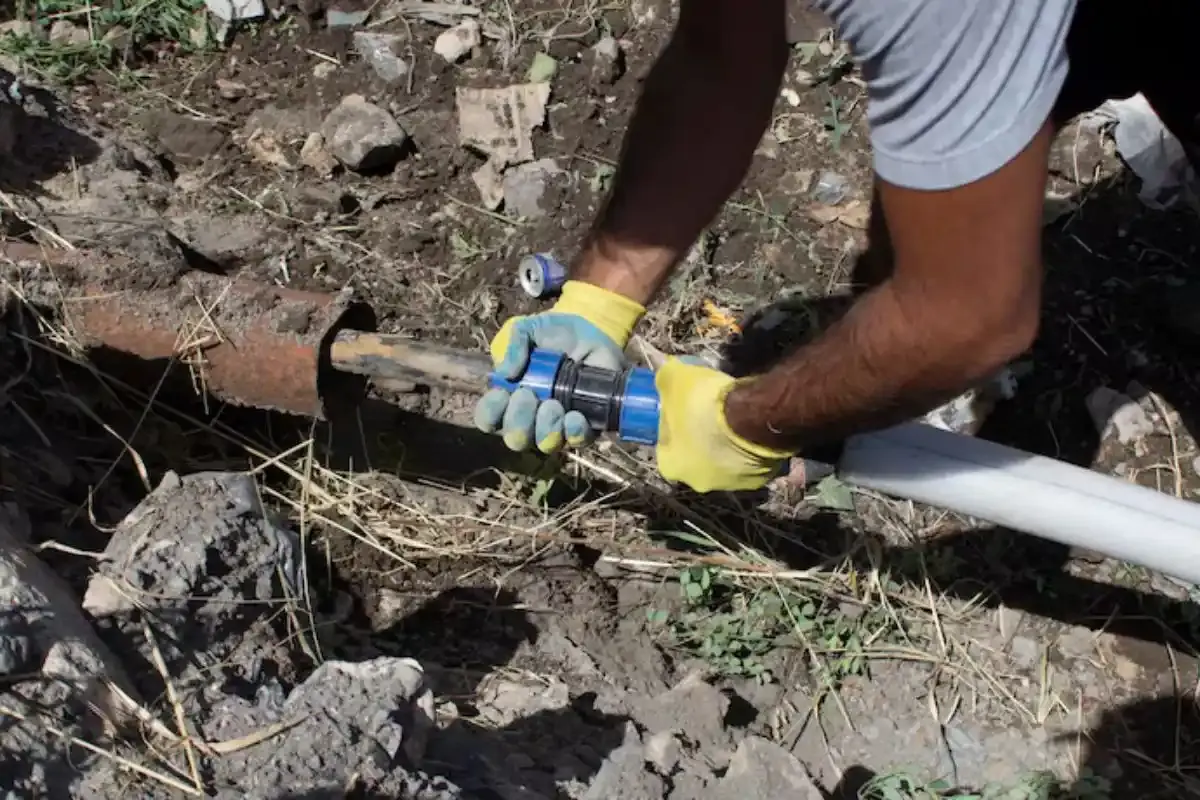
When a service line problem is an emergency
The service line is the buried pipe that brings water from the street main to your house. When it breaks, the water can pour into the ground or the basement, and the supply drops. We book same-day visits when we have a crew free.
- Water gushing in the yard or bubbling through pavement.
- A sudden drop to no pressure or no water in the whole house.
- A wet basement wall where the line enters the house.
- A water bill that jumped with no leak inside.
What to do while you wait
- Close the main valve inside. It is usually near the meter. If it will not close, call the utility.
- Check the meter. With everything off, a moving meter means water is leaving the system.
- Call the utility if the leak is on their side. New Jersey American Water maintains the main and the meter connection. We help you work out where responsibility changes.
- Keep people away from the wet area. Saturated soil near a trench or foundation can shift.
Who owns which part of the line
The utility generally owns the main and the portion up to the curb or meter. The homeowner owns the rest to the house. The boundary depends on the utility's rules and your address, so ask New Jersey American Water where it sits for your property before assuming either side.
We find the leak, identify which side it is on and tell you plainly who should handle it. If it is yours, we give you a repair price. If it is theirs, we tell you who to call.
Plainfield note: lead and galvanized service lines
New Jersey law requires water systems to replace lead service lines within 10 years of the law's start, by July 2031, and treats galvanized service lines as presumed to contain lead. The state's NJDEP lead service line replacement FAQ explains the process, who pays for what and what homeowners should do.
If you hire a contractor to replace your side of the line, the state FAQ says the contractor should coordinate with the water system for the shutoff. We handle that coordination. The water system serving Plainfield is New Jersey American Water, and its service territory information is published on its water quality page.
Repair options compared
| Option | Best when | Trade-off |
|---|---|---|
| Spot repair. | One short break in sound pipe. | Needs a trench at the break. |
| Trench replacement. | Old, corroded or lead pipe along the full run. | Most digging, longest lasting. |
| Trenchless replacement. | Access at both ends, obstacles above the pipe. | Needs pits, fewer surface cuts. |
| Meter or valve work. | The leak is at the connection. | Often involves the utility. |
Call 811 before any digging so buried utilities are marked. A new line is a good time to replace the main shutoff valve and add a pressure regulator if you need one. If the leak is inside the house instead, see leak detection. If old interior pipe is also failing, repiping covers that.
What affects the price of service line repair
- Length and depth.A short shallow line costs less than a long deep one.
- Pipe material.Lead, galvanized, copper and plastic each need different handling.
- Surface restoration.Pavement, sidewalk and landscaping repairs add cost.
- Utility coordination.Shutoffs and inspections affect scheduling.
- Permits.Excavation and plumbing work may require them.
Call (908) 357-1542 for your real number.
No water or a leak in the yard?
Close the main inside, then call. Tell us what you see and where the line enters the house.
Where we repair service lines
We repair service lines across Plainfield, including the 07060, 07062 and 07063 ZIP codes, and in North Plainfield, Scotch Plains and Piscataway.
Water service line questions
Yes. Dispatch is open 24/7. A broken service line is treated as urgent, and we book same-day visits when a crew is available. Call (908) 357-1542.
A wet spot between the street and the house, a drop in pressure for the whole house and a moving meter with everything off all point to it.
It depends on where the leak sits. The utility generally owns the main and its connection, and the homeowner owns the rest. We help you find out for your address.
Older lines may be lead or galvanized. The utility is required to identify service line materials, and you can ask it about your address.
Yes. Call 811 so buried utilities are marked before any excavation.
Sometimes. Trenchless methods use small pits at each end, depending on access and the existing pipe.