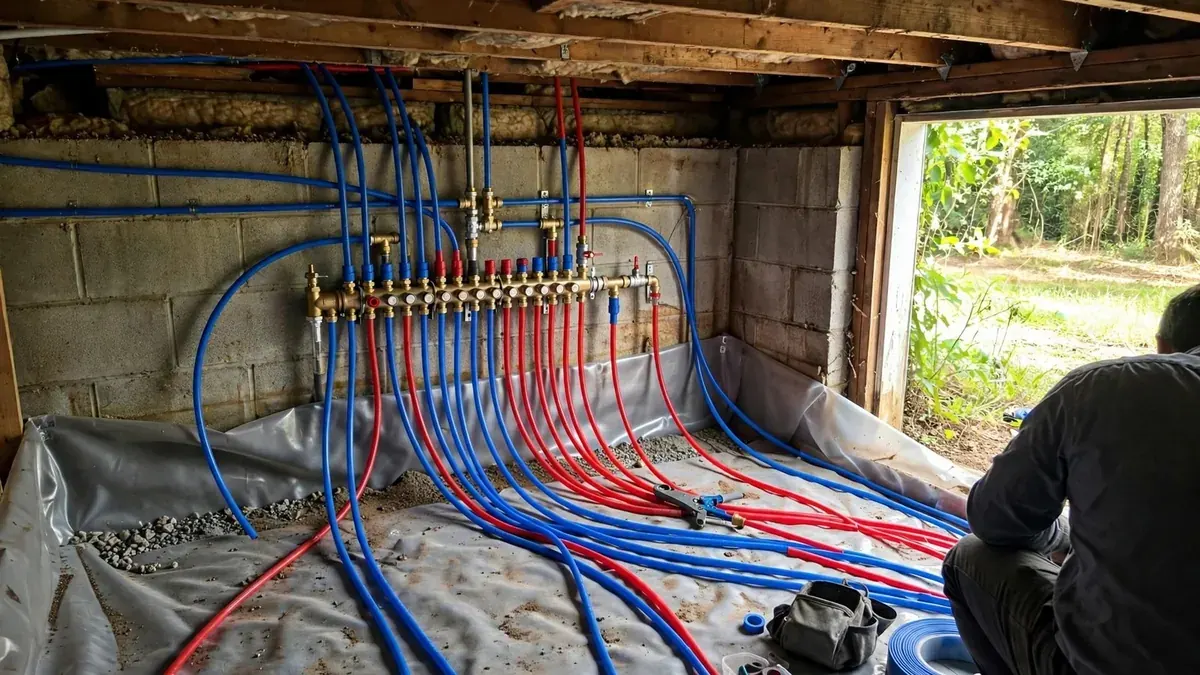
What counts as water heater piping
The piping around a water heater includes the cold water inlet, the hot water outlet, the shutoff valves, the relief valve discharge pipe, the gas line for a gas unit, the vent and any expansion tank or recirculation line. Replacement can mean swapping connectors and valves, or rerouting a run that has corroded.
Many jobs are smaller than people fear. In the most common case, a plumber replaces flexible connectors, the shutoff valves and a short section of corroded pipe as part of a heater replacement. A larger job rebuilds the manifold or reroutes the supply to the rest of the house.
What drives the cost
- Scope.Connectors and valves cost far less than a rebuilt manifold or new gas piping.
- Pipe material.Copper, PEX, CPVC and galvanized replacement differ in material and labor.
- Access.A heater in an open basement is faster than one in a tight closet or crawl space.
- Condition of the rest of the line.Corroded galvanized pipe may need replacing well beyond the heater.
- Code items.Expansion tanks, relief valve discharge pipes and seismic or drain pans add parts.
- Permit and inspection.Fees and scheduling depend on the work.
We do not publish a price range here, because a number without a look at your heater would be a guess. A clear price in writing before work begins is the standard to expect from any plumber.
Materials compared
| Material | Strengths | Watch for |
|---|---|---|
| Copper. | Durable, heat tolerant, long track record. | Material cost and soldering labor. |
| PEX. | Flexible, quick to install, does not corrode. | Not suited to direct connection at some heaters, use approved fittings. |
| CPVC. | Inexpensive and corrosion resistant. | Not always allowed near heat sources. |
| Galvanized steel. | Found in old houses. | Corrodes inside, restricts flow, usually replaced. |
Fittings at the heater itself usually use short copper or approved connectors, even when the rest of the house uses PEX. A plumber will choose what fits the heater and the code.
Questions that change a quote
Two quotes for the same heater can differ by hundreds of dollars for good reasons. Ask what is included in each.
- Does the quote include new shutoff valves, or reuse of the old ones?
- Is the relief valve discharge pipe included and sized correctly?
- Does it include an expansion tank where one is needed?
- Is there a drain pan, and where does it drain?
- What happens to the old heater and old parts?
- Does the price include the permit and the inspection?
A low quote that leaves out the items above is not low once the missing items are added. A clear itemized price is the sign of a plumber who has thought about your house.
Timing a pipe replacement
If the pipes around your heater are corroded, the best time to replace them is when the heater is out. Everything is already shut off and drained, and the plumber has easy access. Doing it later means draining and shutting off the system again. If you are unsure whether the pipes are failing, ask the plumber to check them during the visit and show you the condition.
What to keep after the job
Ask for a written summary of the work: the parts installed, the model numbers and the date. Keep it with the heater's manual. If a connector or valve fails later, the record shows what to replace and when it was last touched. Take a photo of the finished piping too. A picture of the layout helps a future plumber work faster and spot changes.
Also note where the shutoff valves are and label them. In an emergency, thirty seconds of searching can mean a flooded basement. A small tag on each valve costs nothing and saves time for everyone who lives in the house.
Why cheap shutoff valves cost more later
The valves on your heater are the ones you will need in an emergency. A cheap valve that sticks or weeps defeats its purpose. Quarter-turn ball valves are easier to operate than old gate valves with multi-turn handles, and they seal better after years of rest. Adding a union on each side of the heater makes future replacement faster.
Flexible connectors are the other weak point. Braided stainless connectors are easy to fit, but they have a service life. If yours are old, replace them with the heater. A leaking connector in a closet can ruin a floor before anyone notices.
Plainfield note: permits, old pipe and lead rules
The City of Plainfield's homeowner manual lists installing a hot water heater and rearrangements to plumbing pipes as work needing a permit, while ordinary maintenance does not. A like-for-like connector swap is maintenance. A reroute is a rearrangement. Ask the Construction Division at 908-226-2665 before you decide which applies.
Plainfield's older housing often has galvanized pipe, and New Jersey law treats galvanized service lines as presumed to contain lead, requiring water systems to replace lead service lines by July 2031. That law covers the service line from the main to the building, not the pipes in your house, but it is a good time to look at both. The state's NJDEP lead service line FAQ explains the rules.
How to compare quotes
- Ask each contractor to list exactly what is being replaced.
- Confirm the material for each run.
- Ask whether the quote includes the expansion tank, the discharge pipe and the permit.
- Check whether haul-away of old parts is included.
- Ask what happens if they find more corrosion once the pipes are open.
If you are replacing the heater too, see water heater replacement, and for a house with old supply pipe throughout, repiping. We work in Plainfield, South Plainfield and Piscataway.
Water heater piping questions
Old connectors and valves often fail the moment they are disturbed. Replacing them while the heater is out costs less than doing it later.
Usually not directly. Plumbers use approved connectors or short sections of copper at the heater. Always follow the manufacturer's instructions.
Installing a hot water heater and rearranging pipes needs one under the City's homeowner manual. Ordinary maintenance does not. Call 908-226-2665.
We stop, show you and give a price for the extra work before continuing.
Not always. A plumber can test pressure and look at pipe condition to say whether a larger job is needed.