Start with the symptom
Disposals tell you what is wrong if you listen. The sound, or the lack of one, narrows the cause quickly. Before you touch anything, switch the disposal off at the wall switch and, if you can reach it from a dry spot, at the breaker. Never reach into the grinding chamber, even when it is off.
| What you notice | Most likely cause | What to do |
|---|---|---|
| A low hum, no spinning. | A jammed flywheel. | Power off, turn the hex socket underneath by hand. |
| Silence when switched on. | Tripped overload or no power. | Press the red reset button, check the breaker. |
| Spinning with a metal rattle. | A foreign object in the chamber. | Power off, remove it with tongs. |
| Water under the sink. | A loose drain connection or a cracked housing. | Dry the cabinet and find where it returns from. |
| Slow drain, gurgling sink. | A clog beyond the disposal. | Clear the drain line. |
How to free a jammed disposal safely
- Cut the power. Flip the wall switch off and turn off the breaker. A disposal can start if the switch is bumped.
- Look from above with a flashlight. Use a flashlight and tongs, never your hand. Pull out a spoon, a bottle cap or a fruit pit if you see one.
- Find the hex socket. Most disposals have a small hexagonal socket in the center of the underside. A hex key that fits it lets you turn the flywheel back and forth by hand.
- Work the key until it spins freely. A full turn in both directions means the jam is clear. Stiff movement means something is still wedged.
- Press reset and test with water running. Restore power, press the red reset button, then run cold water and switch it on.
If it hums again or trips right away, stop. A motor that cannot turn is overheating, and repeating the test only damages it.
Leaks: where the water is really coming from
Water under the sink is rarely a mystery once you dry everything and run the sink again. Fill the sink and let it drain while you watch each joint with a paper towel. Water at the top of the unit points to the sink flange or its gasket. Water at the side points to the dishwasher hose or the drain elbow. Water from the bottom or from a seam in the housing means the unit itself has failed.
Flange and elbow leaks can be repaired by resealing or replacing a gasket. A cracked housing cannot be repaired, because the tank is no longer watertight. At that point the question is simply which new disposal to buy. Our garbage disposal repair and installation page covers what that visit involves.
Repair or replace
Disposals are inexpensive enough that the repair-or-replace line matters. Freeing a jam, resetting an overload or replacing a gasket costs little, and it is worth doing. A seized motor, a corroded housing or a unit that has tripped the breaker several times in a month usually means replacement.
Age is a factor too. A disposal that has run for many years and is starting to hum, leak or grind slowly is close to done. If you are thinking about a new one, consider the horsepower, the grinding stages and whether the unit is a continuous-feed or a batch-feed type. A household that cooks often benefits from a stronger motor.
What to keep out of the disposal
- Grease, oil and fat. They look liquid going down and harden further along the pipe.
- Fibrous peels and stalks such as celery, artichoke and corn husks.
- Pasta, rice and potato peels, which swell into a paste.
- Coffee grounds in quantity, which pack into sludge.
- Bones, shells, fruit pits and any non-food item.
Run cold water before, during and for half a minute after grinding. Cold water keeps any fat solid so it is chopped and flushed instead of smearing along the pipe wall. If the sink backs up even when the disposal works, the problem is the line, and drain cleaning is the next step.
Installing a replacement disposal: what to expect
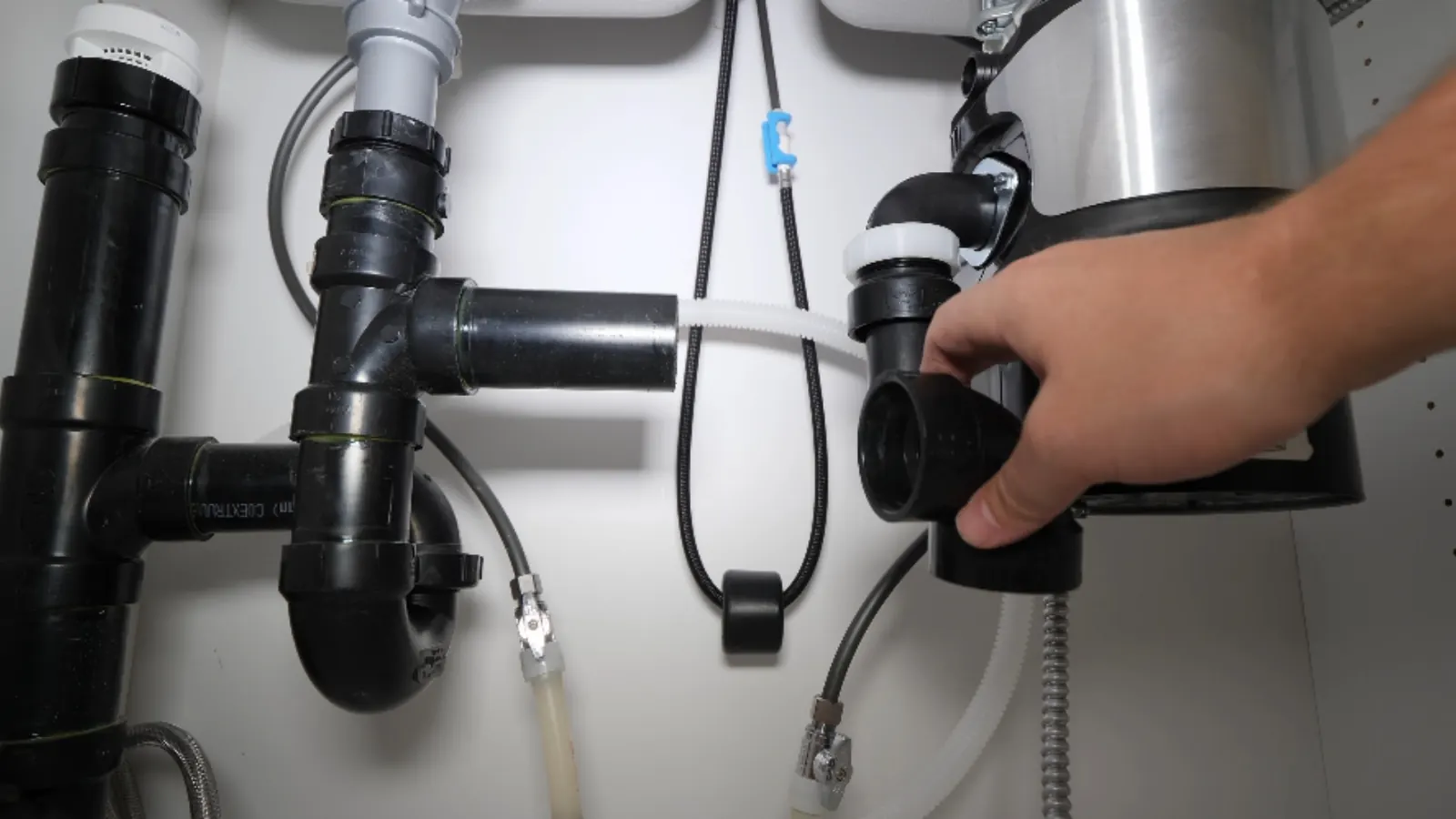
A like-for-like replacement is a manageable job if the old unit is mounted with the same style of flange. The sink flange stays in place, the old unit twists off its mounting ring, and the new unit locks on in its place. The drain elbow and the dishwasher inlet then reconnect, and the power cord or hardwired connection goes back on.
Three details trip people up. The dishwasher knockout plug inside the new unit must be removed if a dishwasher drains through it, and forgetting it means the dishwasher will not drain. The electrical connection must be dry and capped properly. And the discharge elbow must align with the existing drain without strain, or it will leak at the seal.
- Turn off the breaker before touching any wiring.
- Take a photo of the old connections before you disconnect them.
- Check that the new unit's discharge height matches your trap.
- Run water and test for leaks before you close the cabinet.
Odors and cleaning
A disposal that smells is usually holding food residue on the underside of the splash guard and the grinding chamber walls. Grinding a handful of ice cubes with a little rock salt scrubs the chamber, and a few citrus peels freshen it. A small brush cleans the underside of the rubber splash guard, where most odor lives.
If the smell is sewage and not food, the trap or the vent may be the cause, and cleaning the disposal will not help.
Plainfield note: what the City and the regional system say
The City of Plainfield's homeowner manual from the Division of Inspections tells residents to check pipe joints for leaks and repair them immediately, and to consult a licensed plumber for matters it does not cover. A leaking disposal drain joint is exactly the kind of small leak that the manual says not to leave.
Kitchen wastewater from the city goes to the Plainfield Area Regional Sewerage Authority, which serves eight municipalities including Plainfield, North Plainfield and Scotch Plains. Grease you send down the drain does not disappear. It builds up in your own lateral first, and that is where the backup will show. If you are installing a new unit and are unsure whether it needs a permit, call the Plainfield Construction Division at 908-226-2665 and ask before you start.
When to call a plumber
Call if the unit leaks from the body, trips the breaker repeatedly, smells of burning or has damaged the cabinet floor. Call also if the sink drains slowly with the disposal off, because a partial clog downstream will keep returning. For leaks that spread beyond the cabinet, see leak detection.
If you rent, tell your landlord first. Many leases make the landlord responsible for a built-in disposal. If you own, ask a plumber to check the shutoff valves and supply lines while they are under the sink. A stuck valve found now costs less than one found in an emergency. We cover homes in Plainfield and nearby North Plainfield and Fanwood.
Garbage disposal questions
The flywheel is jammed. Turn the power off, insert a hex key in the socket on the underside and work it back and forth until it spins freely. Then press the red reset button.
A little ice is fine, but eggshells and coffee grounds pack into sludge in the drain. Neither is worth the risk in a line that already runs slowly.
Many last around a decade, though heavy use shortens that. A unit that leaks from the housing has failed regardless of age.
The City's homeowner manual says ordinary maintenance does not need a permit, and it lists rearranged pipes and new heaters as permit work. A disposal swap is usually like for like. Call the Construction Division at 908-226-2665 if you are unsure.
The clog is in the drain line, not the disposal. Stop sending water down it and have the line cleared. Older cast iron or galvanized kitchen lines in Plainfield houses often hold years of grease.