Why old cast iron fails
Cast iron was the standard drain and sewer material for generations. It lasts a long time, but it corrodes from the inside. Scale builds up, the wall thins, and cracks start along the bottom of the pipe where water and waste sit.
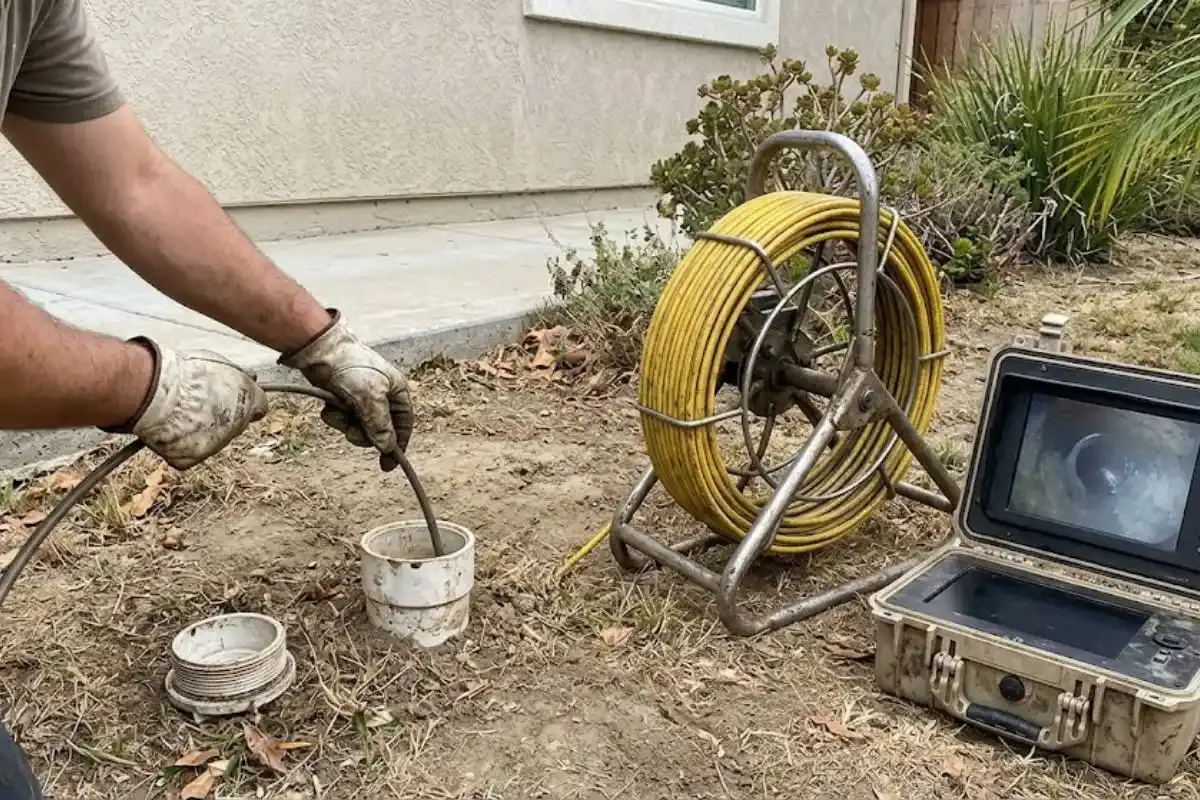
The result is a pipe that looks fine from outside and is failing within. Symptoms include repeated clogs, slow drains, gurgling and sewage odors. A camera is the only reliable way to see the inside.
What pipe lining is
Cured-in-place lining inserts a flexible resin-soaked liner into the old pipe. The liner is inflated against the walls and hardened, creating a new pipe inside the old one. The result seals cracks and joints, resists roots and has a smooth wall.
It reduces the diameter slightly, but a smooth lining often carries as much flow as a rough old pipe. A lined pipe needs the old pipe to be reasonably intact, because the liner depends on the host pipe for support in many cases.
What has to be true for lining to fit
| Condition | Lining fits | Lining does not fit |
|---|---|---|
| Cracks and small offsets. | Yes. | No, if the offset is large. |
| Root intrusion at joints. | Yes, after cutting roots. | No, if the pipe is crushed. |
| Partial wall loss. | Often. | If the pipe is collapsing. |
| Bellies with standing water. | No, a belly holds water after lining. | Needs replacement of that section. |
| Clear access at both ends. | Yes. | No cleanout or no safe entry. |
If sections of the line are collapsed or belly badly, those sections need excavation. See sewer line repair for how spot repair, lining and replacement are mixed.
The steps of a lining job
- Clear the line with cable or hydro jetting so the liner can pass.
- Run a camera to record the pipe and confirm lining will work.
- Prepare the liner and insert it through the cleanout.
- Inflate and cure it, using heat, steam or light depending on the system.
- Cut open any branch connections from inside.
- Run a final camera inspection to confirm the result.
The final recording is your proof. Ask for it, and ask for the one from before the job too.
Lining compared with other repairs
| Repair | Digging needed | Best use |
|---|---|---|
| Cured-in-place lining. | Little, through a cleanout. | Cracked, rooted or pitted pipe that is still open. |
| Spot repair. | A trench over one section. | A short, badly damaged stretch. |
| Pipe bursting. | Two pits. | A long run of failed pipe. |
| Full trench replacement. | The whole run. | Collapsed or badly offset pipe. |
Lining often costs less than a full replacement because there is far less restoration work. The trade-off is that the old pipe stays in the ground, and any weakness in it still matters. A lining is only as sound as the pipe it goes into, so a good camera survey comes before any decision.
Cast iron inside the house
Many older houses have cast iron stacks inside walls, not just buried laterals. Those can be lined too in some cases, but access is harder. Common signs of trouble include slow drains on several floors, gurgling when the upstairs toilet flushes and a persistent sewer smell near the stack. A camera lowered from the roof vent or a cleanout shows the stack's condition.
Planning around the weather
Lining and sewer work are easier in dry weather, when the line carries little water and the ground is firm. If a backup is active, the line is cleared first and the repair is scheduled after. Spring, when roots grow and groundwater is high, is often when a weak lateral shows itself, so a scope in late winter can beat the rush. Ask about scheduling so the work does not leave you without a working toilet for longer than a day.
Signs you may need a camera look soon
- A drain that clears and then clogs again within weeks.
- Gurgling in a tub or toilet when another fixture drains.
- A sewage smell near a floor drain or the cleanout.
- Bits of rust or black flakes in the water that comes back during a clog.
- A wet or soft patch in the yard over the sewer line.
- Cracks or sag visible in exposed cast iron in the basement.
Any one of these is worth a look. Several together mean the pipe is probably past routine cleaning. A camera costs far less than guessing wrong about a repair. The recording also protects you when you sell, because a buyer's inspector may scope the line, and knowing the condition first avoids surprises at the closing table.
If lining turns out not to fit, the recording shows exactly where the problem sits, so a spot repair can be targeted and the rest of the line left alone.
Plainfield note: old districts and the regional system
The Crescent Area Historic District in Plainfield contains 111 contributing buildings, most built between 1870 and 1900. Houses from that era often have cast iron or clay drains that have been patched and extended over more than a century. Plainfield grew from about 5,100 residents in 1870 to more than 34,000 by 1930, and much of the housing from that growth is still in use.
Wastewater from the city flows to the Plainfield Area Regional Sewerage Authority, which serves eight municipalities. The line from your house to the main is generally yours to maintain. Before any lining project, call the Construction Division at 908-226-2665 and ask whether a permit applies.
Questions to ask a contractor
- Can I see the camera recording of my pipe before and after?
- What happens at bends and branch connections?
- What if the liner cannot pass a section?
- What warranty does the liner carry and what does it cover?
- Is a permit needed and who pulls it?
Start with a sewer camera inspection, then compare options. We serve Plainfield, Scotch Plains and Fanwood, where older cast iron laterals are common.
Pipe lining questions
No. A collapsed section has to be excavated and replaced. Lining only works in pipe that is still open enough for the liner to pass.
It needs access at one or both ends. If there is no cleanout, one may need to be installed first.
Manufacturers rate liners for decades. The result depends on the quality of the installation and the pipe beneath.
It seals the joints roots enter through, so regrowth is less likely.
Possibly. Call the Construction Division at 908-226-2665 before work starts.