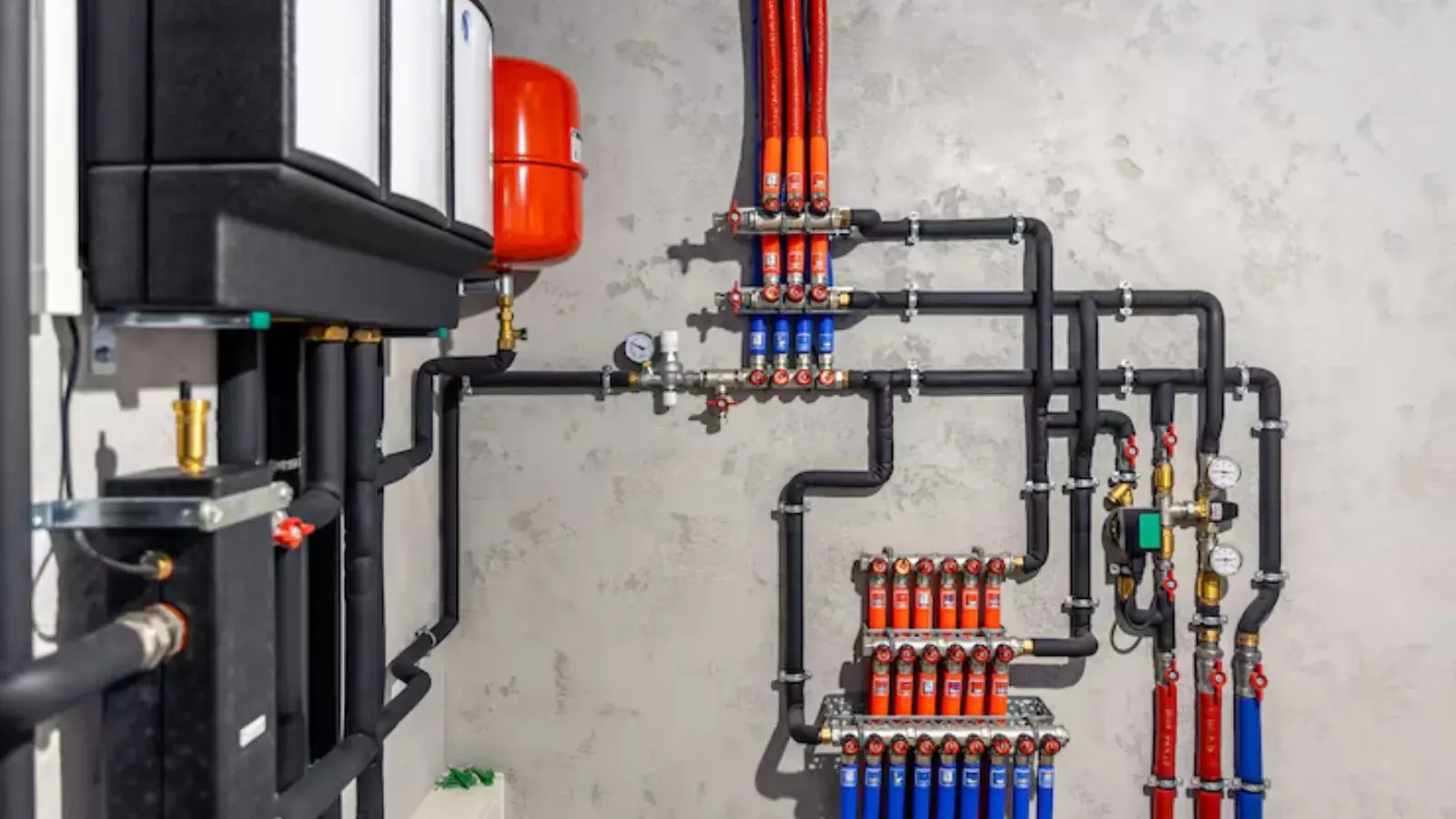
Why radiators trap air
A hot water heating system is meant to be full of water. Air gets in when the system is refilled, when a small leak lets water out or when dissolved air comes out of the water as it heats. Air rises, so it collects at the top of radiators and blocks hot water from reaching them.
The signs are easy to spot. The bottom of the radiator is hot and the top is cool, or the whole radiator stays lukewarm while the pipes are hot. You may also hear gurgling or knocking as water pushes past a bubble.
How to bleed a hot water radiator
- Turn the heat on and let the system run. Radiators should be warm so you can find the cold ones.
- Turn the circulator pump off. Switch the boiler to off or turn down the thermostat so the water stops moving.
- Find the bleed valve. It is a small valve at the top corner of the radiator, with a square stem or a slot.
- Hold a cup and a rag beneath it. Water may spit. Hot water can scald.
- Open the valve a quarter turn. Use a radiator key or a small screwdriver. You will hear air hiss out.
- Close it when water appears. A steady stream of water means the air is out. Close the valve firmly but do not overtighten.
- Check the boiler pressure. Venting air lowers the pressure. Top up the system to the level on the boiler's gauge.
Work from the radiator nearest the boiler to the farthest, and from the lowest floor to the highest. Air moves, so a bleed in one place can send it somewhere else.
What bleeding will not fix
| Symptom | Likely cause | Next step |
|---|---|---|
| Cold radiator that stays cold after bleeding. | A stuck valve, a closed zone valve or a blocked radiator. | Call a plumber. |
| Frequent need to bleed. | A leak in the system or a failed expansion tank. | Have the system checked. |
| Banging that continues. | Scale, low water or a failing circulator. | Service the boiler. |
| Pressure drops after every bleed. | A slow leak or a failed pressure valve. | Find the leak. |
| Whole house cold. | Boiler lockout or fuel problem. | Call right away. |
If the boiler is leaking, showing an error or has lost heat in the whole house, see boiler repair. A boiler that also makes your domestic hot water may share the same problem as your water heater.
Before you start, gather these
- A radiator key, available at hardware stores, or a flat screwdriver for slotted valves.
- A small cup or a jar to catch water.
- Old towels for the floor.
- A flashlight to see the valve in a dark corner.
Some radiators have automatic air vents instead of manual bleed valves. Those vent on their own, and you should not open them. If a radiator has neither, call a plumber to look at it.
A seasonal heating checklist
- In early fall, run the heat briefly to find cold radiators.
- Bleed each radiator from the lowest floor up.
- Check the boiler's pressure gauge and top up if needed.
- Look for drips at valves and joints.
- Test the carbon monoxide alarms near sleeping areas.
- Book a boiler service before the first cold snap.
Doing this before the first cold night is much easier than doing it on one. If your boiler is old, an annual service is the best insurance against a winter failure.
A note on steam systems
Some older Plainfield houses heat with steam, not hot water. Steam radiators have one pipe and a vent valve near the top, and they hiss as air leaves. Do not bleed a steam radiator with a key. A vent that spits water or stays shut needs replacing, and a plumber can check the boiler's water level and pitch of the pipes. If you are unsure which system you have, look for a pressure gauge near the boiler. Steam systems run at very low pressure, while hot water systems show a higher reading.
Noisy pipes and other heating clues
A hot water system makes a few normal sounds, such as a soft tick as pipes warm and expand. Loud banging, rushing water or a high whine are not normal. Banging often means trapped air or a pipe that is loose in its hangers. A whine can mean a failing circulator pump. A rumble from the boiler itself points to scale.
Cold spots matter too. If a single radiator is cold while the rest are warm, the cause is local, often a stuck valve or air. If an entire floor is cold, a zone valve or a circulator is more likely. Write down what you see and when. That log helps a technician find the fault in minutes instead of an hour.
Also look at the floor under each radiator for rust stains or drips at the valve. A slow weep wastes water and lowers system pressure, which leads to more air and more cold radiators.
Plainfield note: what the City's manual says
The City of Plainfield's homeowner manual, issued by the Division of Inspections, tells residents on hot water systems to bleed all radiator valves before heating season to get rid of accumulated air in the pipes. That is a primary source for the advice in this guide, and it fits a city where many older houses still heat with boilers and radiators.
The manual also says that changing your heating system to a different type needs a permit, and it tells residents to consult a licensed plumber for matters it does not cover. The Construction Division can be reached at 908-226-2665.
Safety first
- If you smell gas, leave the house and call the gas utility or 911 from outside.
- If a carbon monoxide alarm sounds, go outside and call 911.
- Never open a bleed valve on a steam system. Steam radiators work differently.
- Do not drain a hot system. Hot water can scald.
- Keep the area around the boiler clear.
A yearly service visit before the heating season catches worn parts before they fail on a cold night. We serve Plainfield, Scotch Plains and Fanwood, where older boiler systems are common.
Radiator and boiler questions
It is cool at the top and warm at the bottom, or it gurgles. Those are the signs of trapped air.
Once a year before the heating season is a common routine. The City's manual recommends bleeding all radiator valves before heating season.
No. Steam systems vent air through valves on the radiators. Do not open a hot water style bleed valve on a steam system.
Venting air removes some pressure. Top the system up to the level marked on the gauge.
If bleeding does not help, if the pressure keeps falling or if the whole house is cold.